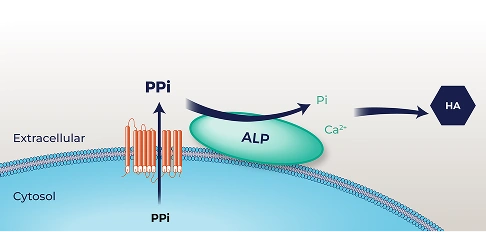
Bone mineralization8,21
Under normal conditions, ALP dephosphorylates PPi and releases Pi, which then binds with calcium to form hydroxyapatite crystals—the building blocks of strong bones.





In one study of adults with HPP (N=82), the prevalence of neurologic symptoms was reported as follows18II:
I started having horrible peripheral neuropathy and the pain got so bad, I went to the ER.
— Patient, living with HPP



The role of elevated PEA in the pathogenesis of HPP is not fully understood.
The understanding of the impact of deficient ALP on PPi, PLP, and PEA, as well as other substrates in the body, including phosphate metabolism in energy-critical organs, continues to evolve, with current understanding based primarily on preclinical studies using mouse models of HPP.11,29
Under normal conditions, ALP dephosphorylates PPi and releases Pi, which then binds with calcium to form hydroxyapatite crystals—the building blocks of strong bones.
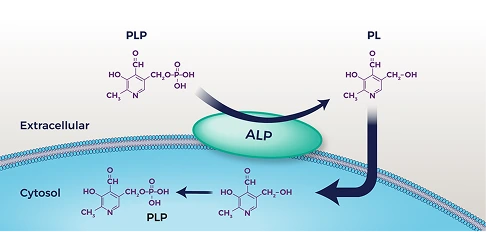
ALP is also responsible for dephosphorylating PLP, the active form of vitamin B6, to its precursor PL, allowing PL to cross cell membranes, including muscle cells and the blood-brain barrier, where it is re-phosphorylated as PLP.
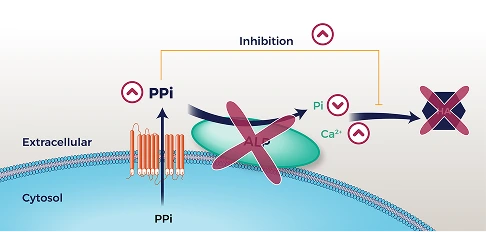
Low ALP activity leads to extracellular PPi accumulation and an increased PPi:Pi ratio, impairing hydroxyapatite deposition and mineralization of bone and teeth.
Clinically, this may present as fractures or pseudofractures, skeletal deformities, and early tooth loss.
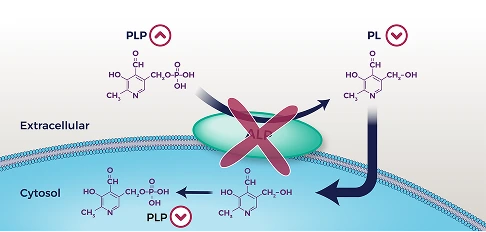
The buildup of PLP in systemic circulation leads to an intracellular deficiency of vitamin B6 in muscle and the CNS, which may manifest clinically as muscle weakness, impaired physical function, and neurologic symptoms, including seizures.
The important thing is to recognize patients in your practice with persistently low levels of alkaline phosphatase. It's important to recognize those patients and to refer them to an appropriate HPP specialist.
— Dr Chad Deal, Rheumatologist
a

a